
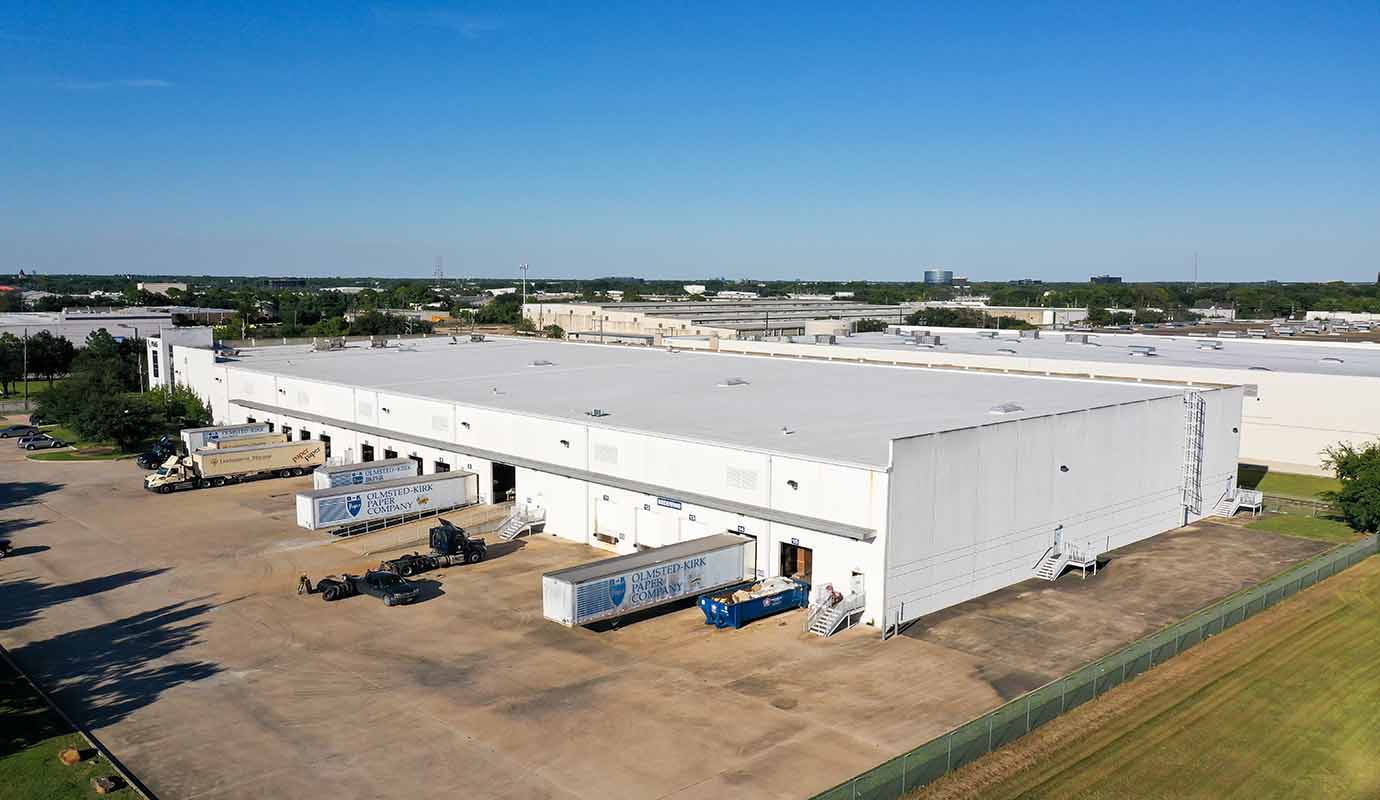
REIT Roofing Services work starts with verified roof conditions, clear repair limits, and a practical decision path for the building owner.
REIT Roofing Services roof scope
Little Rock is central to Arkansas's commercial real estate market, and industrial REITs like EastGroup Properties have recognized the market's logistics value, positioned along the I-40 and I-30 corridors with access to Memphis, Dallas, and regional distribution networks. For asset managers overseeing industrial, retail, and net-lease properties across Pulaski County and the broader Central Arkansas market, roofing is a recurring operational decision with direct implications for NOI, tenant relationships, and the accuracy of CapEx reserves reported to investors. Arkansas's climate presents a specific combination of risks, severe thunderstorms, hail events, tornado-path exposure, and ice storm events that can strike in late winter, that make consistent roof inspection and maintenance a prudent risk management practice rather than optional deferred maintenance.
Multi-property preferred vendor programs in Little Rock allow REIT asset managers to pre-position roofing response capacity before severe weather season arrives. Arkansas experiences hailstorms powerful enough to puncture single-ply membranes and strip granules from modified bitumen systems, and tornado-path damage events, even for buildings not in the direct path, can leave behind uplift damage that is invisible from ground level but compromises the system structurally. A master service agreement with a local contractor who can mobilize inspection teams within 24 hours of a weather event, assess damage across multiple properties simultaneously, and begin insurance documentation processes immediately is worth considerably more than an ad-hoc vendor relationship that requires re-qualification when speed matters most.
The NOI impact of deferred roof maintenance in Little Rock manifests in several interconnected ways. Emergency repairs cost 30 to 50 percent more than planned replacements when mobilization happens under duress. Tenant abatement exposure on industrial and retail leases reduces near-term cash flow and creates the renewal friction that erodes long-term occupancy rates. Insurance carriers who discover deferred maintenance during claim investigations may assert policy exclusions that shift costs entirely to the property owner. Each of these consequences was avoidable with a structured inspection and maintenance program, making proactive roof investment one of the highest-return operating decisions an asset manager can make.
Ten-year CapEx reserve models for Little Rock commercial portfolios should account for hail replacement risk as a probabilistic line item alongside standard system aging. Central Arkansas's position in the hailstorm belt means that a statistically significant percentage of flat and low-slope roofs will experience damage events over any ten-year horizon. Reserve models that account only for age-based deterioration without hail probability factors will systematically understate capital requirements and create investor reporting surprises when insurance deductibles and uninsured damage costs show up in the CapEx line unexpectedly.
Pre-acquisition property condition assessments in Little Rock should specifically request hail damage evaluation as a distinct deliverable. Hail damage on TPO and modified bitumen systems is not always visible without close-range inspection and is frequently missed by generalist PCA inspectors who are not trained to identify impact bruising, granule loss patterns, and membrane compression damage. REIT acquisition teams that discover undetected hail damage after close, a common experience in Arkansas markets, are absorbing costs that should have been negotiated as seller credits or priced into acquisition assumptions.
Under NNN lease structures common in Little Rock's retail and industrial portfolio, tenants typically maintain roofs up to a defined repair threshold, with structural replacement responsibility reserved for the landlord. In gross lease environments, more common in multi-tenant office and medical properties, the landlord bears full roof responsibility. REIT accounting teams must classify all roof expenditures accurately as CapEx or OpEx, maintaining clear documentation that distinguishes capital improvements from routine repairs. Post-storm insurance repair work adds an additional layer of complexity, as the treatment of insurance proceeds and associated repair costs must be documented with specificity to avoid audit exposure.
Little Rock's acquisition market attracts value-add buyers who see yield premiums in Central Arkansas assets priced below coastal market valuations. The properties underpinning those acquisitions frequently carry deferred maintenance histories that are not fully reflected in purchase pricing, roofs are a common area where prior owners deferred capital to support near-term cash yields. REIT portfolio managers who acquire these assets without specialist roof assessments are absorbing risk that should have been priced at the deal table, and discovering it 18 to 24 months into the hold when reserves prove inadequate.
Planning Questions
What decides the right reit roofing services path?
The roof assembly, leak history, drainage, access, rooftop equipment, and operating risk below the roof all shape the recommendation.
Can work be phased around occupied spaces?
Yes. The scope should identify tenant-sensitive areas, daily dry-in expectations, access routes, and weather limits before production starts.
What documentation should ownership expect?
Photo records, repair notes, roof-area observations, product information when applicable, and a clear summary of remaining roof risks.