
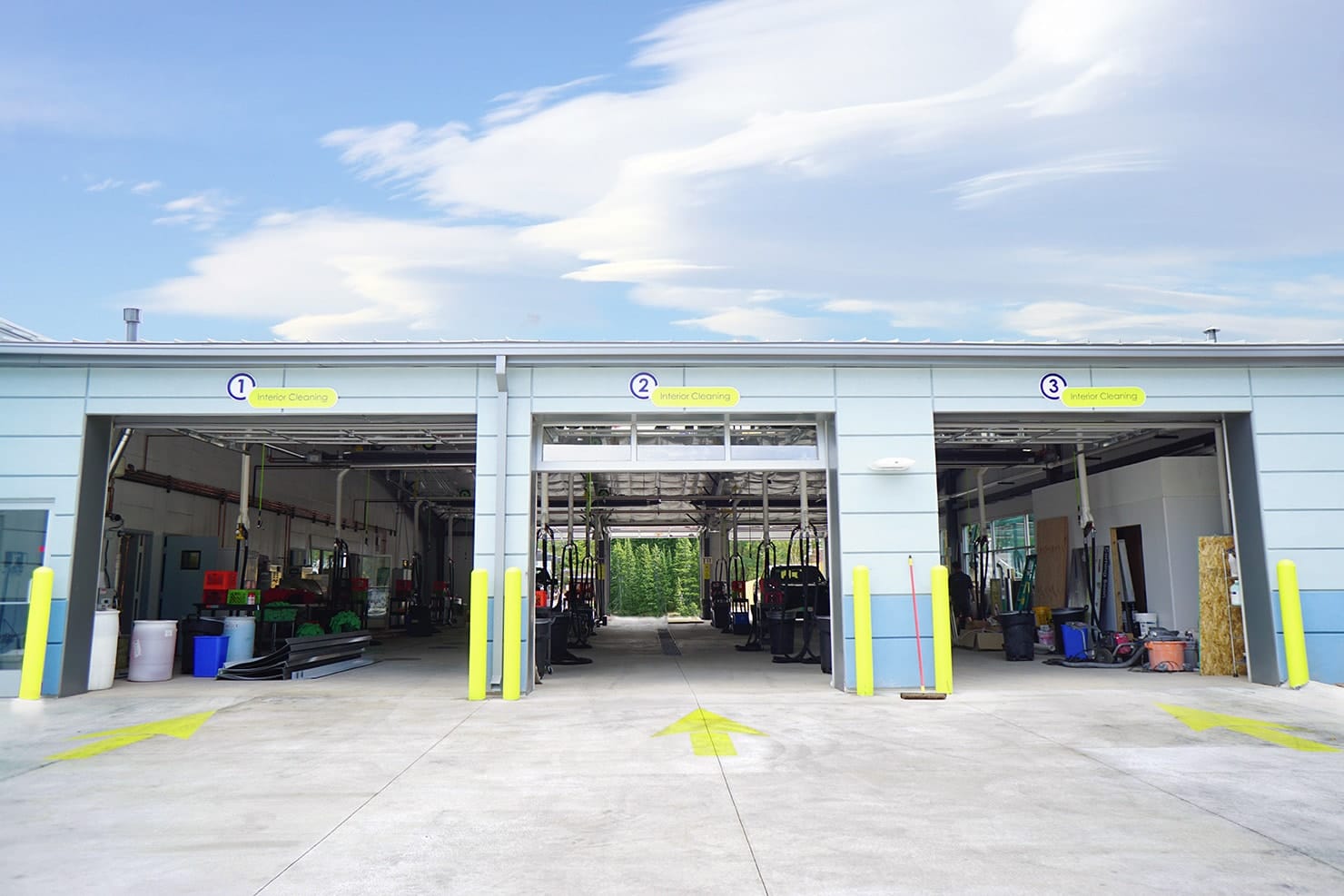
Car Wash Facility Roofing work starts with verified roof conditions, clear repair limits, and a practical decision path for the building owner.
Car Wash Facility Roofing roof scope
A car wash is a building that manufactures humidity. Hot water hits vehicles, detergent and wax atomize into the air, and the whole interior volume turns into a warm fog that rises straight up into the deck. On a Chenal Parkway express tunnel or a self-serve bay off University Avenue, that fog does not politely vent away. It condenses on the underside of the roof deck, soaks into the insulation from below, and corrodes fasteners and steel deck flutes long before anything shows as a stain inside. We have walked car wash roofs in Little Rock where the membrane on top looked fine and the deck beneath was rusting through. The roof on a wash building has to be designed against attack from the inside, not just the weather on top.
Little Rock makes that worse than most cities would. The metro sits in a humid subtropical band that already runs near seventy percent relative humidity through the summer, with close to fifty inches of rain a year and a long wet stretch from March into May. When the outdoor air is that loaded and the wash interior is fogged with warm vapor, the dew point inside the roof assembly sits in a range where condensation is almost guaranteed unless the assembly is built to manage vapor drive. A car wash roof that would survive in a dry climate fails in central Arkansas because the moisture has nowhere to go.
The chemistry is the second half of the problem. The same detergents, tire-shine compounds, rust inhibitors, and hot wax that clean the cars also ride the exhaust plume onto the membrane, the edge metal, and anything within reach of the blower stacks. Most commercial single-ply is not warrantied against that kind of chemical bath. We have seen tunnels along the I-430 and Cantrell commercial strips where the membrane near the dryer exhaust had gone brittle and chalky years ahead of the rest of the roof, purely from chemical fallout. Picking a membrane for a wash building means matching it to the actual chemical program the operator runs, not pulling a default spec off a retail job.
For the tunnel bay itself we lean toward a thicker PVC membrane, fully adhered, because PVC holds up to the alkaline detergents and waxes better than TPO or EPDM over the long haul, and adhering it kills the flutter that tunnel air pressure puts into a mechanically fastened sheet. Underneath, the real work is vapor control: a vapor retarder and an insulation assembly sized so the warm wet interior air cannot reach a cold surface inside the roof and condense. That detail is what protects the deck, and it is the detail most generic roofers skip on a wash building. On the equipment room, the office, and the canopies we can drop back to a standard fully adhered or mechanically attached assembly, since those zones are not living in the fog.
In-bay automatics and self-serve bays usually carry less airborne chemical load than a full express tunnel, but they bring their own headache: flat, undersized roofs that pond. With Little Rock's spring downpours dropping inches in a single system, standing water over a wash bay is a slow leak waiting for a fastener to give. We check drainage on every wash roof and build in tapered insulation to move water to the drains and scuppers when the existing slope cannot.
Washes here run seven days a week in season, so we plan tunnel roof work for the early-morning or after-close window and keep canopy and exterior work to hours when we can hold vehicles clear of the lane. Dry-in is confirmed before we leave each day, because the next pop-up storm off the Arkansas River valley does not wait for us to come back.
Planning Questions
Why does the deck rust out before the membrane looks bad on a car wash?
Because the damage comes from inside. The warm, humid air a wash generates rises into the roof and condenses on the underside of the deck and inside the insulation, corroding steel and fasteners from below while the membrane on top still looks intact. In Little Rock's already humid climate this happens faster, which is why we build the assembly with a vapor retarder and properly sized insulation rather than just replacing the top sheet.
What membrane do you specify for the wash tunnel itself?
Usually a 60-mil PVC, fully adhered, for the tunnel bay. PVC resists the alkaline detergents and hot wax used in commercial washes better than TPO or EPDM, and the adhered installation prevents the membrane flutter that tunnel air pressure causes. Equipment rooms, lobbies, and canopies can use a more standard assembly since they sit outside the heavy chemical and steam zone.
Does the car wash chemical program affect my warranty?
It can. Most single-ply warranties exclude chemical exposure, so before we spec a membrane we confirm with the manufacturer that your specific detergent and wax program is compatible and that the warranty will hold under those conditions. Some manufacturers offer chemical-exposure or wash-specific warranties, and we identify those during the proposal.
How do you handle the blower and dryer exhaust penetrations?
The high-volume dryer and blower stacks throw warm, chemical-laden air across the surrounding roof, so we treat each one as its own flashing detail with oversized curbs and a membrane in that zone chosen for chemical resistance. Standard HVAC curb details are not adequate around wash exhaust.