Commercial Roof Insurance Claim Assistance work starts with verified roof conditions, clear repair limits, and a practical decision path for the building owner.
Commercial Roof Insurance Claim Assistance roof scope
A commercial roof insurance claim moves on documentation, not on a verbal description of what the crew remembers seeing on the roof.
Carriers do not pay for damage nobody wrote down. After a hail event, straight-line wind, or a spring line of severe thunderstorms moves through Central Arkansas, the roof needs a documented inspection before the tarps come off and before repairs start covering evidence. We walk the field, mark impact points and lifted seams by roof area, photograph flashing, curbs, drains, and rooftop units, and record moisture readings where water has already found a path into the deck.
An adjuster covering a large Arkansas territory may see the roof once, for an hour, on a day scheduled around a dozen other stops. We meet them on-site, walk the same roof areas we already documented, and point to specific membrane, flashing, and drainage conditions rather than asking them to take a general damage claim on faith.
Commercial roof damage is rarely limited to the field membrane. Edge metal, coping, scuppers, pitch pans, curb flashing, and rooftop equipment curbs take wind and hail damage that a quick drive-by inspection can miss. A scope built from a full roof walk accounts for tear-off depth, code-required insulation upgrades, and matching material where partial replacement is proposed.
Some Little Rock commercial claims come back denied on a wear-and-tear finding, or approved at a number that covers a patch rather than the actual repair. When that happens, we can re-inspect the roof, add documentation the first review may have missed, and provide a written condition report the owner can bring back to the carrier or agent for reconsideration.
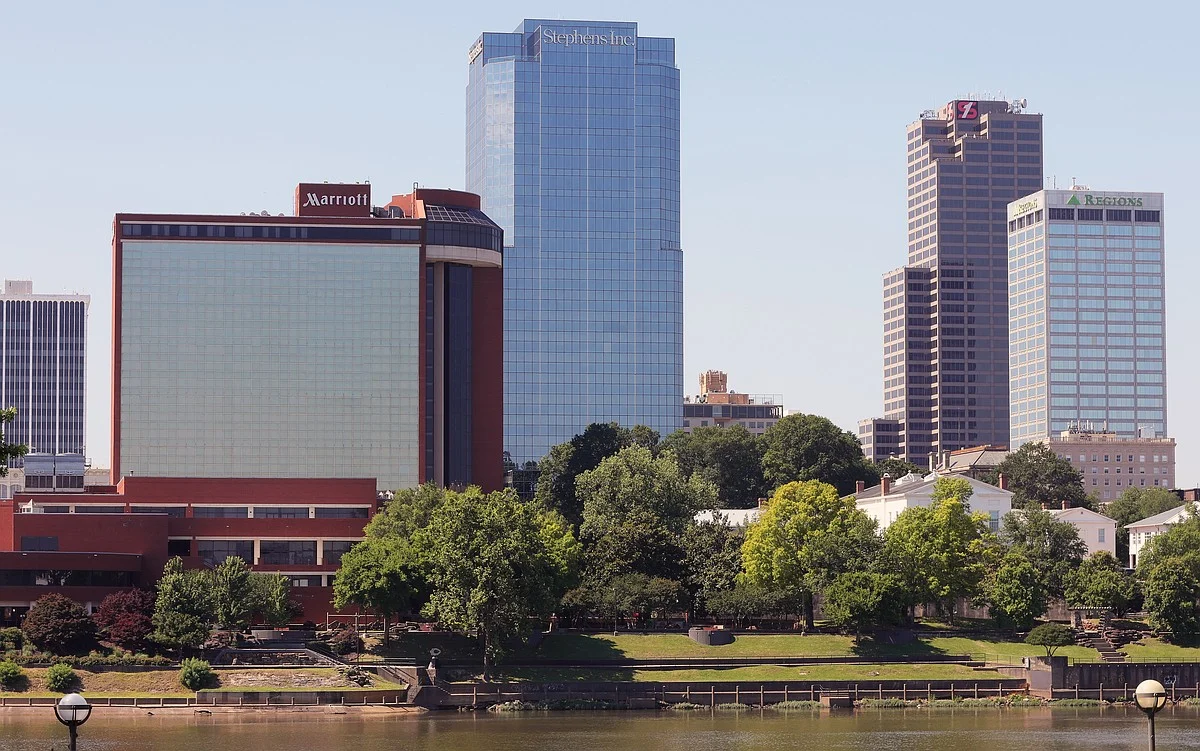
Central Arkansas carries a mix of aging built-up and modified bitumen roofs downtown and around the state-government corridor, newer TPO and PVC systems on retail and office buildings along Chenal Parkway, and older membrane on warehouse and industrial roofs near the Port of Little Rock and the Arkansas River. Claim timing matters most during the spring severe-weather stretch when adjusters are covering a backlog of roofs across the region.
We're your roofing contractor, not a public adjuster: we inspect, document, and produce the condition report so you and your adjuster are working from an accurate scope of the actual roof damage.
Planning Questions
Does insurance cover commercial roof replacement?
Most commercial policies cover sudden storm-related damage, but coverage depends on your specific policy, deductible, and depreciation terms. We document the physical roof condition; your policy determines what is covered.
What is the commercial roof insurance claim process?
Report the loss, get the roof inspected and documented, meet the adjuster on the roof, and compare the resulting scope against the actual damage before any repair work begins.
What if my commercial roof claim gets denied?
We can re-inspect the roof and add documentation the first review may have missed, then give you a written report to bring back to your carrier.
Should I repair or replace after a covered roof loss?
That depends on the extent of damage, the roof's remaining service life, and whether repair materials can be matched. We lay out the actual condition so the decision is based on the roof, not a guess.