
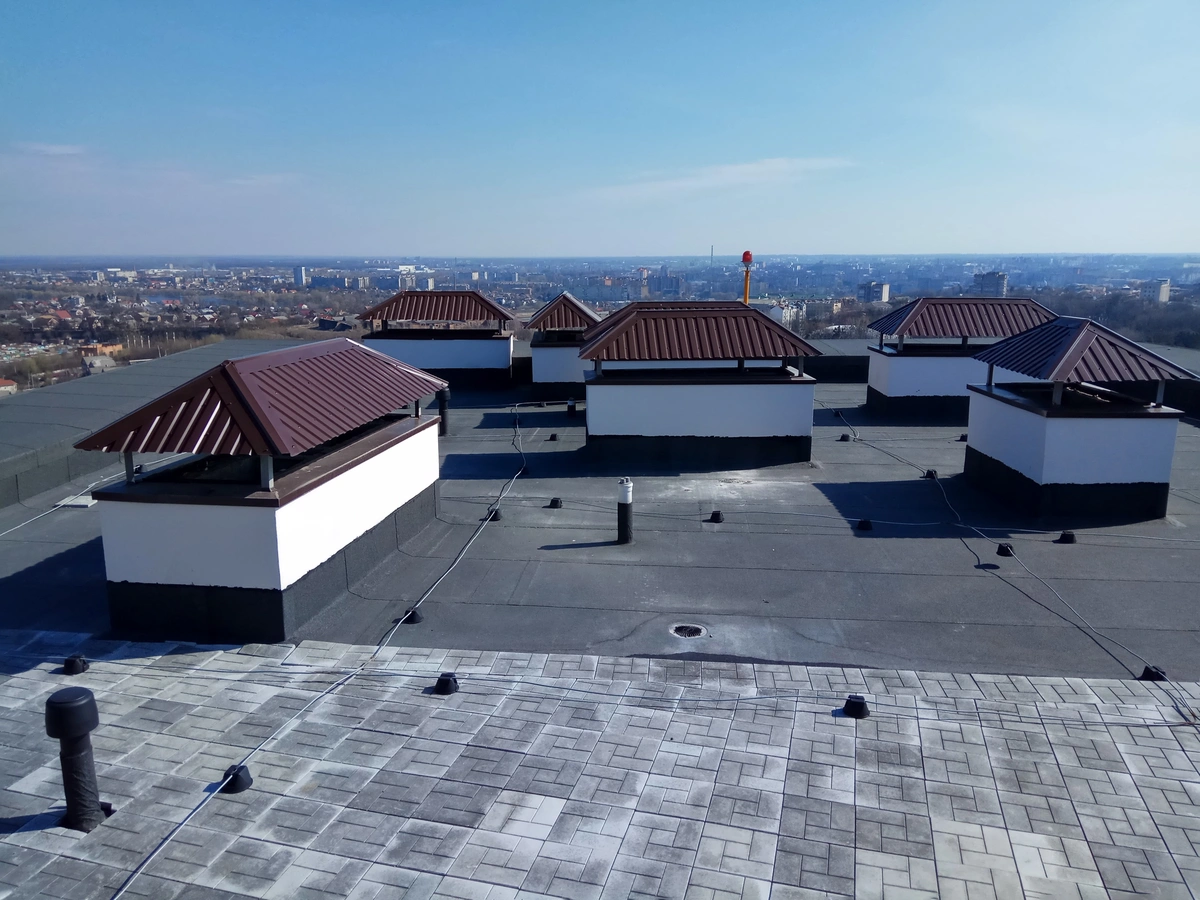
Office Building Roofing work starts with verified roof conditions, clear repair limits, and a practical decision path for the building owner.
Office Building Roofing roof scope
Stephens Inc., the investment banking and financial services firm whose headquarters tower at has defined the Little Rock downtown skyline for decades, represents the Class A office environment that makes commercial roofing on occupied buildings a distinct professional discipline. The corporate office buildings clustered in downtown Little Rock and along the Chenal Parkway corridor in west Little Rock face Arkansas weather that is demanding by any measure: tornado-season wind events, summer heat that reaches 100°F, persistent humidity that keeps roof surfaces wet and mold-prone, and ice storms in winter that can load horizontal surfaces with unexpected weight. Managing a re-roofing project on a building like a Stephens campus tower requires a level of coordination that most roofing contractors are not equipped to deliver.
Occupied building protocols for Little Rock office roofing begin with an assessment of the tenant mix and their operational sensitivities. Financial services tenants cannot tolerate interruptions to their server room cooling systems, the rooftop HVAC units serving those spaces must stay online or have backup cooling arranged. Legal and professional services tenants are sensitive to noise and odors. Medical office tenants may have regulatory requirements about construction activity near patient care spaces. A commercial roofing contractor working on a Class A Little Rock office building must have a project manager who can map these sensitivities tenant by tenant and develop a work sequencing plan that avoids triggering any of them.
HVAC coordination in Little Rock office buildings is complicated by the city's summer climate. Arkansas summers are long and intensely hot and humid, and rooftop HVAC equipment in Little Rock runs essentially continuously from May through September. Temporary shutdown of a rooftop unit for curb re-flashing during an August afternoon can produce rapid temperature rise in the served tenant space, which is unacceptable for occupied office environments. The practical implication is that HVAC curb work on Little Rock office buildings must be scheduled during evening or early morning hours in summer, when outdoor temperatures are manageable, or during the relatively mild spring and fall periods when short equipment shutdowns are more tolerable.
Green roof options for Little Rock office buildings have gained interest among corporate campus owners who face sustainability reporting requirements from tenants. The city's annual rainfall, over 50 inches, means stormwater management is a genuine operational and regulatory issue, and green roofs that retain stormwater on-site can reduce municipal stormwater utility charges. Little Rock's Little Rock Municipal Water Works uses a stormwater credit system, and a qualified green roof installation can generate credits that offset utility costs annually. Semi-intensive sedum roofs are the most practical option for existing office buildings; the structural analysis required for intensive green roofs with significant growing media depth frequently reveals that reinforcement is needed.
Arkansas's commercial energy code follows ASHRAE 90.1 and requires R-20 minimum for low-slope commercial roofs in Climate Zone 3A, which covers the Little Rock area. While this is a lower threshold than northern markets, most Little Rock office building re-roofing projects specify R-25 to R-30 to support energy performance and ENERGY STAR goals. White TPO and white PVC are the most common compliant membranes, and the reflective surface contribution to reduced cooling loads in Little Rock's climate is substantial, the long, hot summer means that cool roof energy savings accumulate significantly over the warranty period.
Lease obligations in Little Rock office buildings follow the same legal landscape as other US markets: tenants have rights to quiet enjoyment, HVAC service, and notice before disruptive work. The specific provisions vary by lease, and Little Rock building owners should review all tenant leases with Arkansas real estate counsel before scheduling re-roofing work. One uniquely Arkansas consideration is the state's severe weather season, tornado watches and warnings can shut down rooftop work without notice, and project schedules should include weather contingency days, particularly if work is planned for spring and early fall when severe weather is most frequent.
Parapet walls on Little Rock office buildings, particularly the taller Class A towers in the central business district, are exposed to the elevated wind speeds that prevail at building height above street level. Parapet cap flashing attachment must be engineered for the wind pressure at the building's full height, not the surface-level wind speed. Anchor spacing for metal cap flashings on taller buildings should be designed by a professional engineer, and the flashing attachment pattern must be documented and reproducible for any future replacement work. A parapet flashing that fails at height during a spring storm system creates both a water intrusion emergency and a life-safety hazard from falling material.
Planning Questions
What decides the right office building roofing path?
The roof assembly, leak history, drainage, access, rooftop equipment, and operating risk below the roof all shape the recommendation.
Can work be phased around occupied spaces?
Yes. The scope should identify tenant-sensitive areas, daily dry-in expectations, access routes, and weather limits before production starts.
What documentation should ownership expect?
Photo records, repair notes, roof-area observations, product information when applicable, and a clear summary of remaining roof risks.