
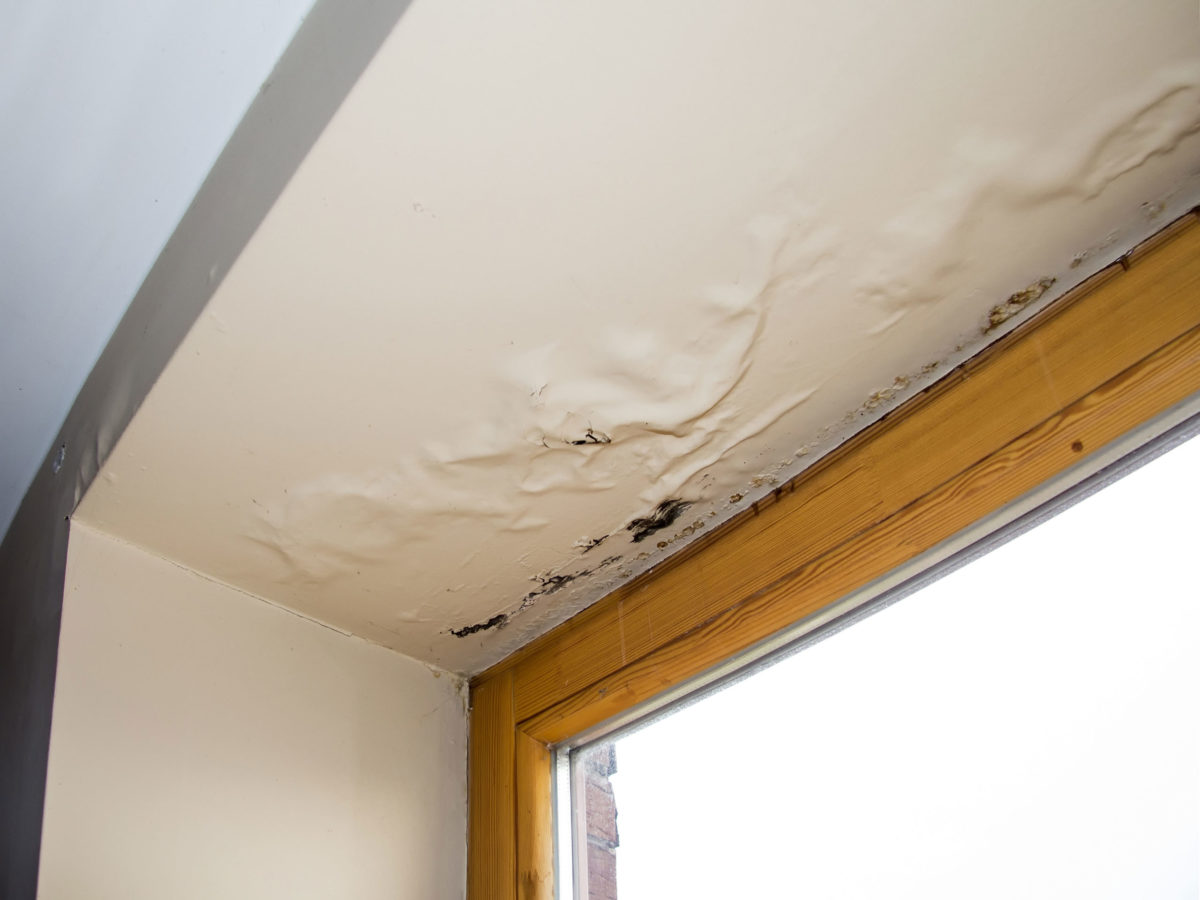
Humidity & Moisture Damage Roof Repair work starts with verified roof conditions, clear repair limits, and a practical decision path for the building owner.
Humidity & Moisture Damage Roof Repair roof scope
On a surprising number of the commercial buildings we open up around Little Rock, the water inside the roof did not come down through the membrane. It came up from below, pushed by the building's own humidity. Central Arkansas summers run long and muggy, and any building that generates warm, moist interior air drives water vapor toward a cooler roof deck overhead. A kitchen in a River Market restaurant, a commercial laundry, a natatorium, a process line near the Port, even a tightly conditioned office with an unbalanced air handler all do it. When that vapor condenses inside the insulation, it produces damage that reads like a roof failure but is really a building-physics failure, and treating the symptom without understanding the cause just rebuilds the same trap.
Warm air holds far more moisture than cold air. As humid interior air migrates upward and meets the underside of a cold membrane or deck on a winter night, it hits its dew point and condenses inside the insulation. There is no dramatic leak; the assembly simply gets wetter and wetter. The warning signs arrive in a predictable order: blisters where vapor pressure lifts the membrane off its substrate, ridging along the insulation board joints as the boards swell and buckle, and finally saturated insulation that has lost its R-value and begun corroding the steel deck beneath it. By the time a maintenance tech feels a soft spot underfoot or spots a stain on a ceiling tile, the moisture has usually spread well past that one visible point.
For much of the year in Little Rock's climate, vapor drive runs upward and outward, from the warm interior toward the roof, which means a vapor retarder generally belongs low in the assembly near the deck, where it stops interior moisture before it reaches the cold zone above. We find roofs where that retarder was never installed, where it ended up on the wrong side of the insulation, or where a prior reroof punctured it and nobody sealed the holes. Any one of those turns the insulation into a sponge. Reading the original vapor-control strategy, and pinpointing where it broke down, is the part of this work that decides whether a repair lasts or fails again in two seasons.
Wet insulation does not stop at the edge of the stain, so we map it before we scope a repair. An infrared survey, walked or flown during the evening cool-down, lights up the saturated zones, which hold the day's heat and read warm against the dry roof around them. We confirm each zone with a capacitance moisture meter and pull core cuts that let us see the insulation and deck condition firsthand and measure how deep the water has reached. Only then do we know whether this is a contained repair or a roof-wide problem. On a humidity-driven failure that distinction is everything, because the wet area on the thermal map is almost always larger than anyone expected from the ceiling stains alone.
Repairing the wet area is only half the job. If the interior humidity load and the vapor path stay the same, the new insulation follows the old insulation straight into failure. So we look at the whole picture. That can mean specifying a properly placed vapor retarder in the new assembly, adding a cover board to stabilize the membrane, improving rooftop ventilation, or flagging interior sources, an unbalanced HVAC system, a humidification setup, an unvented process, that the owner's mechanical contractor needs to take on. We are roofers, not mechanical engineers, but we tell the owner plainly when the roof is the victim of a building condition rather than the cause of it, because a roof rebuilt over an uncorrected humidity source is money spent twice.
Trapped moisture does not hold steady; it spreads, and the longer it sits the more it costs. Wet insulation provides almost no thermal resistance, so the building bleeds conditioned air through the roof and the HVAC works harder and longer through every Little Rock summer, quietly running up operating costs before anyone connects it to the roof. Meanwhile the water keeps corroding the deck. A roof reading fifteen percent wet insulation this year can read closer to forty percent two seasons later, and a problem that would have been a manageable cut-and-patch turns into a full tear-off with deck replacement. The single best move an owner can make is catching it early, which is why we recommend a documented moisture survey on any commercial building that has not had one in the last several years.
Saturated insulation carries a structural and a safety dimension too, not just an energy one. A corroded deck loses load capacity, and a roof that has been quietly wet through several cycles can hide deck deterioration that only announces itself when someone steps through a soft spot. Documenting deck condition during the moisture survey lets the owner make a budgeting decision before it becomes an emergency call. And because humidity damage so often masquerades as ordinary wear, it gets misfiled on insurance claims and capital plans. We separate genuine storm or impact damage from a chronic moisture condition, so the owner is not trying to claim a vapor-drive failure as hail, and so the capital plan reflects what is really driving the roof's decline.
Planning Questions
What decides the right humidity & moisture damage roof repair path?
The roof assembly, leak history, drainage, access, rooftop equipment, and operating risk below the roof all shape the recommendation.
Can work be phased around occupied spaces?
Yes. The scope should identify tenant-sensitive areas, daily dry-in expectations, access routes, and weather limits before production starts.
What documentation should ownership expect?
Photo records, repair notes, roof-area observations, product information when applicable, and a clear summary of remaining roof risks.