
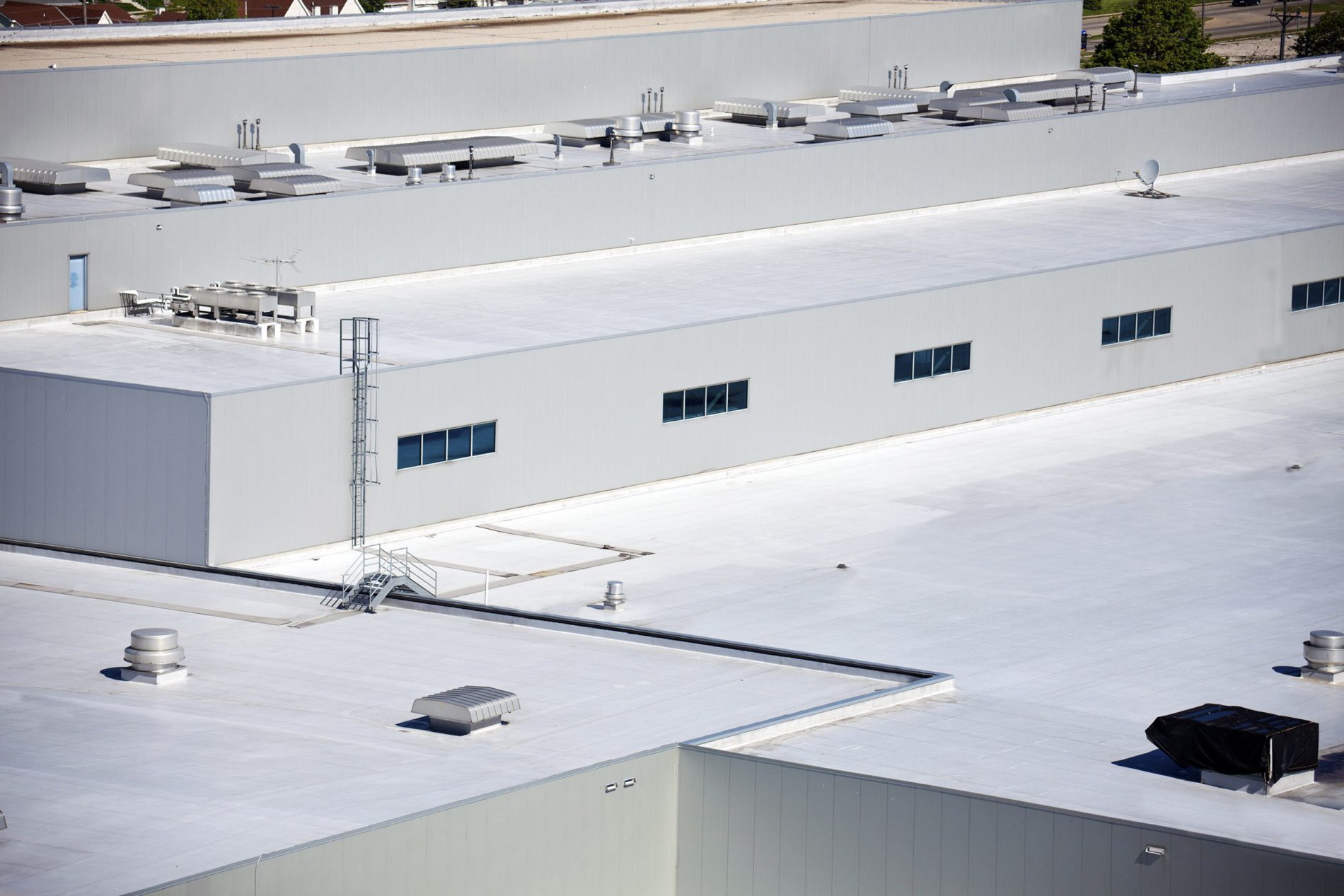
Manufacturing Facility Roofing work starts with verified roof conditions, clear repair limits, and a practical decision path for the building owner.
Manufacturing Facility Roofing roof scope
Dillard's corporate distribution center and the numerous food processing and packaging plants along the Arkansas River corridor make Little Rock one of the more active industrial roofing markets in the mid-South. Big River Steel's broader Arkansas industrial footprint, along with facilities like the Chenal Valley distribution hub, creates consistent demand for contractors who understand the specific mechanical, chemical, and scheduling demands of heavy manufacturing environments.
Process equipment density on Little Rock's industrial roofs reflects the diversity of the city's manufacturing base. Food processing plants in the Riverdale industrial district require rooftop ventilation systems that manage cooking fumes, steam exhaust, and grease-laden air. These exhaust streams deposit on roof surfaces and around fans in ways that accelerate membrane degradation. Contractors serving this sector specify grease-resistant membrane coatings and stainless-steel curb assemblies that resist the corrosive deposits produced by continuous food production operations.
Chemical and fume resistance is a specification priority for Little Rock's packaging and light chemical manufacturing facilities. Printing plants along the I-630 industrial corridor release solvent vapors that concentrate on flat roof surfaces during low-wind conditions. Modified bitumen systems with aluminum cap sheets reflect heat and resist solvent attack better than standard granule-surfaced membranes in these applications. Specifying the correct membrane chemistry during the design phase is far less expensive than a premature replacement driven by chemical degradation.
Vibration management is critical at Little Rock's heavy manufacturing sites. Compressor farms, large HVAC systems, and mechanical conveyors all transmit cyclic loads into the roof structure. At facilities where large rooftop mechanical units run continuously, the fastener patterns on mechanically attached membranes require engineering review to ensure they account for both wind uplift and vibration-induced fatigue. Fully adhered systems on concrete decks offer better vibration resistance at these locations but require careful substrate preparation in Little Rock's humid climate, where moisture migration through the deck can compromise adhesive bond strength.
Skylights and translucent roof panels are common on Little Rock's warehouse and light assembly facilities, where daylighting reduces electrical loads significantly in the demanding Arkansas summer heat. Proper integration of barrel-vault skylights into low-slope roofing assemblies requires raised curbs with generous flashing heights to handle the intense rainfall that accompanies Little Rock's springtime thunderstorm season. Curb heights of at least eight inches above finished roofing are standard practice for the region.
Arkansas's extreme temperature swings, from summer highs well above 95°F to winter ice storms that leave inch-thick glaze on rooftops, demand roofing systems with high thermal movement tolerance. TPO membranes with heat-welded seams expand and contract significantly across this temperature range. Properly designed detail work at perimeters, including slip-sheet layers under perimeter metal and flexible sealants at transitions, prevents the membrane tearing and flashing separation that Little Rock contractors see repeatedly on older, poorly detailed systems.
Schedule coordination with Little Rock manufacturers requires advance planning and flexibility. Food processing facilities typically have short maintenance windows between production shifts, and roofing noise or odors that penetrate into food-safe production zones can trigger regulatory compliance issues. Experienced contractors sequence their work to keep hot-air welding and adhesive operations away from air intake zones and schedule penetration work during the facility's cleanest production periods.
Planning Questions
What decides the right manufacturing facility roofing path?
The roof assembly, leak history, drainage, access, rooftop equipment, and operating risk below the roof all shape the recommendation.
Can work be phased around occupied spaces?
Yes. The scope should identify tenant-sensitive areas, daily dry-in expectations, access routes, and weather limits before production starts.
What documentation should ownership expect?
Photo records, repair notes, roof-area observations, product information when applicable, and a clear summary of remaining roof risks.