
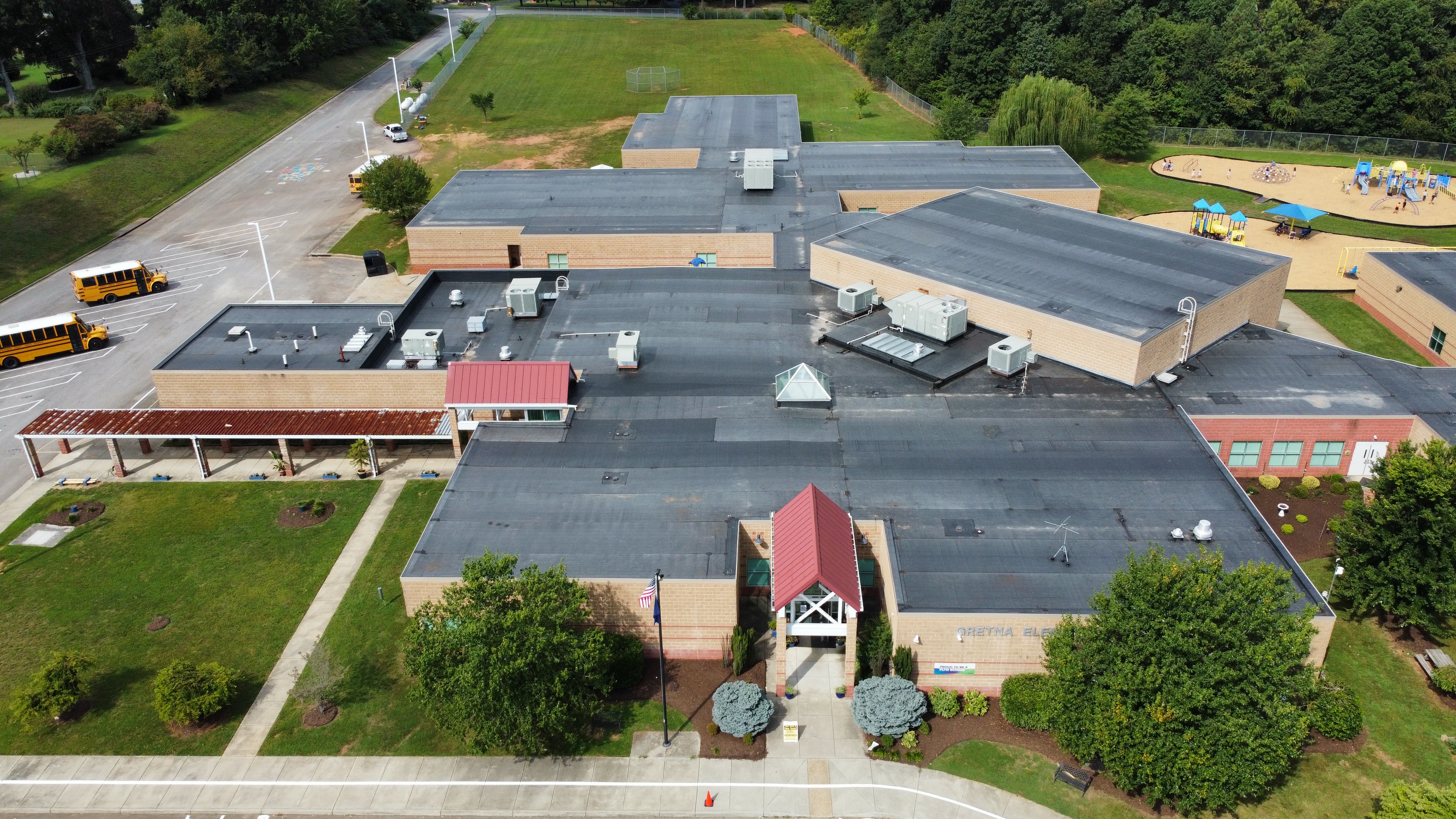
School and K-12 Educational Building Roofing work starts with verified roof conditions, clear repair limits, and a practical decision path for the building owner.
School and K-12 Educational Building Roofing roof scope
Little Rock School District, serving the city's diverse population with over two dozen schools across Pulaski County, runs one of the most active institutional facilities programs in Arkansas, a district whose aging school building inventory requires ongoing roof maintenance and periodic full replacements that must be executed within tight summer windows, strict public procurement rules, and the reality that every dollar spent on facilities competes with instructional resources in a district budget. Commercial school roofing in Little Rock is an institutional discipline that demands experience, efficiency, and genuine familiarity with how Arkansas public school procurement works.
Summer scheduling in Little Rock is compressed. The district calendar typically runs from early August through late May, leaving a narrow window from late May through late July for major roof replacement work on active school campuses. We plan all material procurement by April, finalize crew assignments by May 1, and mobilize within days of school dismissal to maximize productive summer days. Any project that bleeds into August when teachers return for pre-service training must be managed with extraordinary care, noise, dust, and building access disruption are simply not acceptable in a school building where staff are preparing classrooms.
Arkansas's severe weather season overlaps significantly with the school roofing window. Hailstorms, high-wind events, and heavy thunderstorm activity are most common in April, May, and June, precisely when Little Rock school roofing projects are starting or underway. We maintain temporary weather protection materials on every school job site and implement a rapid cover protocol whenever storm warnings are issued. An open deck on a Little Rock school during a spring severe weather event is an unacceptable risk to the building and to the project schedule.
Institutional roofing on Little Rock school buildings involves a higher density of roof penetrations than most commercial buildings of equivalent size, cafeteria exhaust hoods, gymnasium HVAC units, kitchen grease duct penetrations, and science lab fume exhaust all create flashing challenges that require individual engineering attention. Grease duct penetrations in particular demand chemical-resistant flashing materials and clearance from combustibles that standard membrane flashing details cannot satisfy. We address kitchen and grease exhaust penetrations with specialized high-temperature flashing assemblies as a standard part of our school roofing scope.
Pulaski County public school procurement follows Arkansas competitive bidding statutes, requiring public advertisement, sealed bids, and performance bond requirements for contracts above threshold values. We maintain active Arkansas contractor licensing, required bonding capacity, and all certifications required for public school work in the state. We have completed multiple Little Rock School District projects through the full public procurement cycle and understand the documentation requirements at every stage from pre-bid to final payment.
Budget cycles at Little Rock School District align with the Arkansas public school fiscal year, which runs July through June. Capital projects identified in the spring facilities assessment are typically authorized in June for the subsequent fiscal year, with project solicitation in winter and construction in the following summer. We work with LRSD facilities staff during the planning phase to provide accurate budget estimates and scope options that fit within the district's capital allocation before formal procurement begins.
Safety planning on Little Rock school campuses is particularly important during summer extended learning programs, when students may be present in portions of the building while roofing work proceeds overhead in other areas. We prepare written site safety plans with zone-specific requirements, install physical barricades at all re-entry points to active roofing areas, and assign a dedicated site safety monitor whose sole job is maintaining separation between construction activity and any student or staff access areas throughout the project.
Planning Questions
What decides the right school and k-12 educational building roofing path?
The roof assembly, leak history, drainage, access, rooftop equipment, and operating risk below the roof all shape the recommendation.
Can work be phased around occupied spaces?
Yes. The scope should identify tenant-sensitive areas, daily dry-in expectations, access routes, and weather limits before production starts.
What documentation should ownership expect?
Photo records, repair notes, roof-area observations, product information when applicable, and a clear summary of remaining roof risks.