
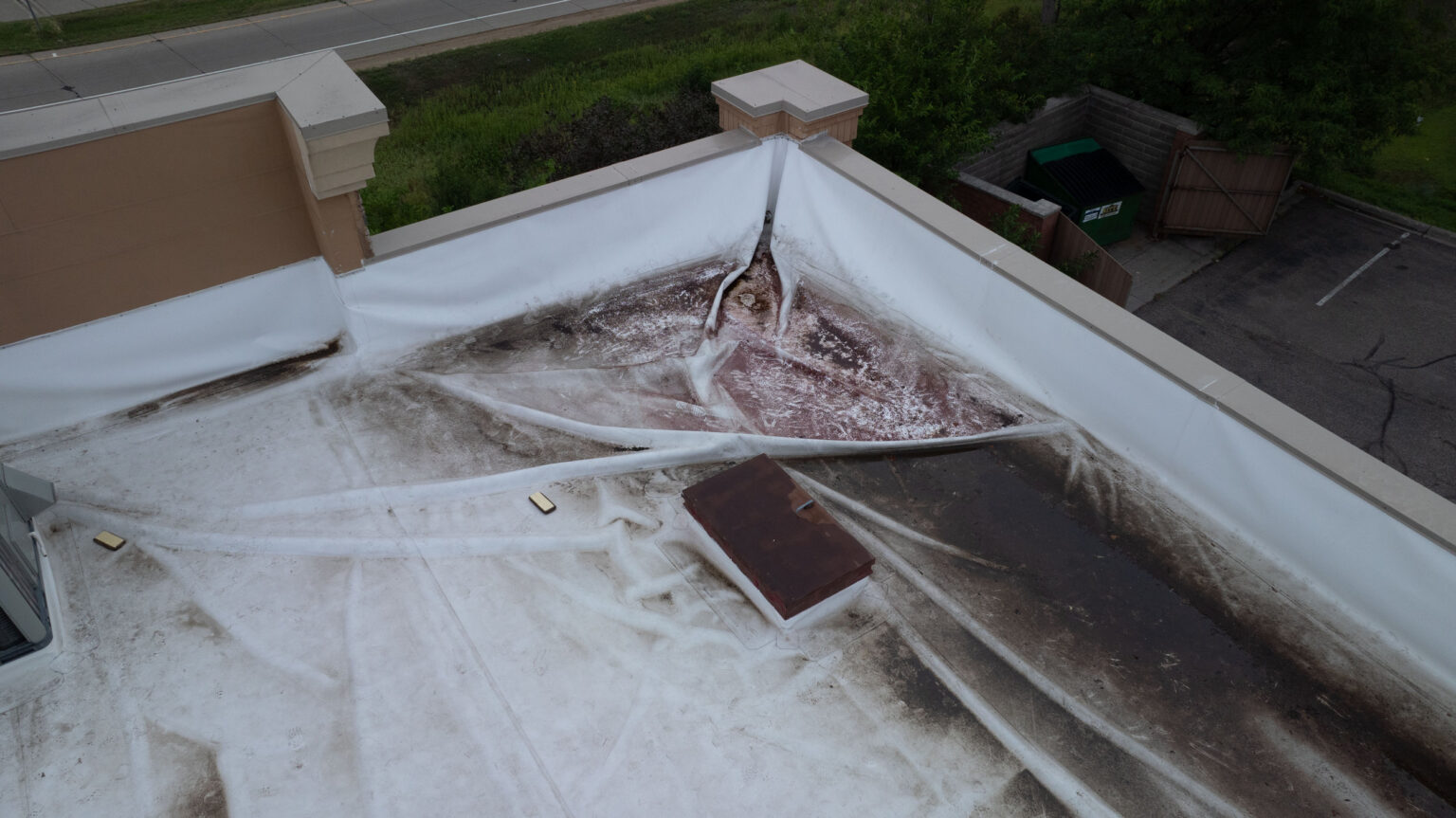
When hail crosses Pulaski County, the difference between a paid roof claim and a denied one is usually the file, and a service agreement is how that file gets written.
The claim conversation starts long before the storm
Ask anyone who has taken a commercial hail claim through appraisal: the adjuster's first questions are about the roof's history, not the storm. How old is the membrane? When was it last inspected? Can you show its condition before the loss date? An owner who answers with a folder of dated, photographed service reports is negotiating from strength. An owner with no records is inviting the carrier to attribute every soft spot and open seam to wear and tear, which is excluded on every commercial property policy we have ever seen.
What a service agreement puts in your file
Our agreement puts two scheduled visits per year on your roof, and every visit feeds the file. Each one produces a written condition report with time-stamped photos: membrane condition by roof section, seam and flashing status, drainage performance, and every repair we made while we were up there. Within a couple of seasons you hold something most Little Rock building owners cannot produce, a continuous, dated record of a roof that was sound, maintained, and watertight before the loss date. Insurers call this pre-loss documentation. Public adjusters call it the strongest card an insured can hold.
How the record separates hail from age
Hail bruising on an aged, chalked membrane looks a lot like blistering. Wind-lifted corner flashing looks a lot like flashing that was never fastened well. When a carrier's engineer walks the roof eight months after the storm, everything ambiguous gets argued, unless there is a photo of that same corner, intact and sealed, taken at a service visit four months before the loss. That comparison is often the entire claim. It is also why we photograph the same reference points on every visit, the way a physician retakes the same X-ray.
The visits themselves are real work
The documentation rides on top of genuine maintenance. The spring visit lands ahead of Arkansas's severe-weather season: drains and scuppers cleared, seams probed, pitch pans topped, loose terminations refastened, the small failures that let a thunderstorm into the building get closed before the season starts. The fall visit repairs what the summer opened and gets the roof tight before the year turns. Small repairs happen on the spot and go straight into the report; anything bigger comes back to you as a photographed, prioritized quote. Manufacturer warranty desks expect exactly this cadence of documented maintenance, so the same file that supports a claim also keeps the warranty enforceable.
After the storm, you are first in line
Agreement holders get priority dispatch when severe weather moves through central Arkansas, tarping and dry-in first, then a documented damage assessment mapped against your condition history, formatted so your agent or adjuster can drop it straight into the claim. From Riverdale offices to the warehouse rows at the Port of Little Rock, the owners who close claims fastest are the ones whose roofs we already knew.
Put your building on the schedule before the next storm season does it for you. Call 501-833-6486 or request a scope and we will walk the roof, document its condition, and price the agreement from what we find.
Claims and Coverage Questions
Will maintenance records actually change a claim outcome?
Frequently, yes. Carriers deny or discount commercial roof claims by attributing damage to deterioration, deferred maintenance, or pre-existing conditions. Dated photo reports directly rebut all three. No contractor can promise a claim result, but we have watched documented roofs get approvals that undocumented roofs in the same hail swath did not.
Do you work with our insurance agent or adjuster?
Yes. After a loss we provide the condition history, the damage assessment, and a repair or replacement scope in the format adjusters work from, and we attend the adjuster's roof walk when you want us there. You control the claim; we make sure the roof facts in it are complete and defensible.
The roof may already have storm damage. Can an agreement still start?
Yes, the first visit establishes a baseline. If we find damage consistent with a recent storm, we document it immediately and tell you whether a claim is worth pursuing before the policy's reporting window closes. The agreement then protects the roof, and the record, going forward.
Does the agreement include an inspection after every hail event?
Named-storm and significant-hail checks are part of priority response: when a damaging cell tracks over your building, you call, and we get on the roof ahead of non-agreement work. The post-event inspection is documented against your baseline so new damage is provable as new.