
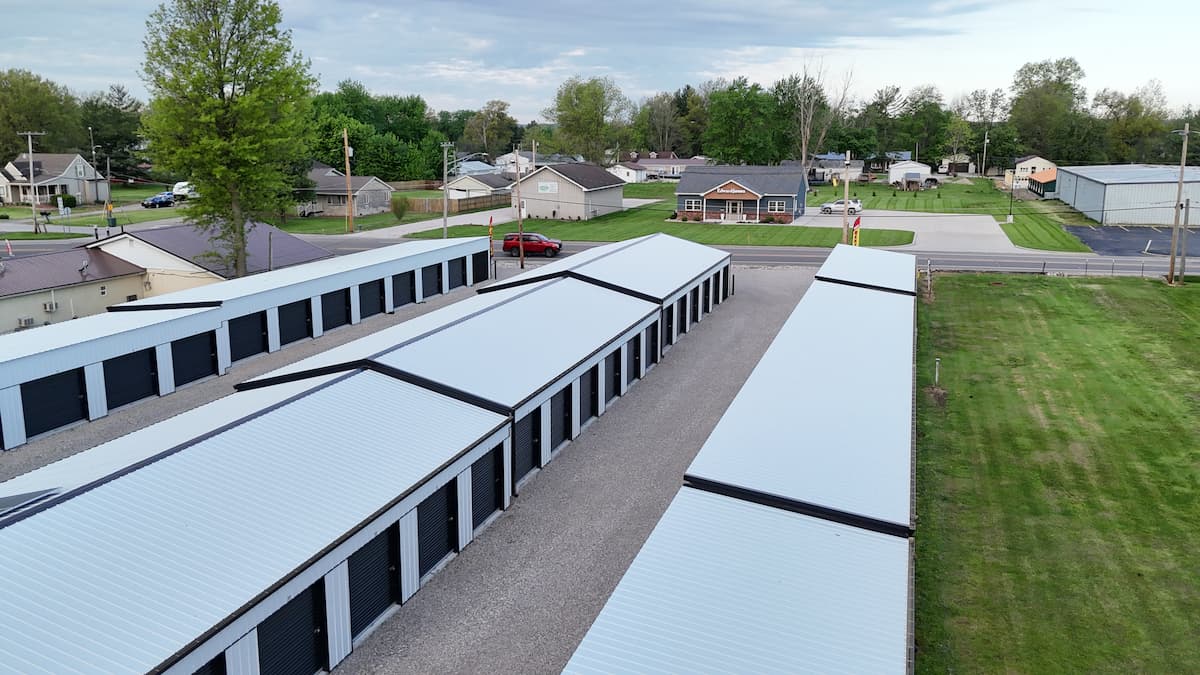
Self-Storage Facility Roofing work starts with verified roof conditions, clear repair limits, and a practical decision path for the building owner.
Self-Storage Facility Roofing roof scope
Public Storage operates multiple locations across Little Rock, including busy facilities on Chenal Parkway and Interstate 630, and those properties illustrate everything that makes self-storage roofing in Central Arkansas both demanding and consequential. Arkansas sits squarely in a severe-weather corridor where spring tornado watches, summer hail events, and occasional ice storms can arrive in the same month, and a storage operator whose roof is not engineered for that full range of hazards is one bad storm away from a serious tenant liability situation.
Large-footprint storage campuses in Little Rock typically range from 60,000 to over 100,000 square feet of combined roof area, spread across buildings of varying age and construction type. When a portfolio property includes structures built in different decades, the roofing contractor must assess each building independently before recommending a system, because substrate conditions, drain locations, and structural load capacity can vary dramatically from one building to the next on the same parcel.
Tenant protection during construction is a core operating constraint for Little Rock storage facilities. Arkansas summers are hot and humid, and a partially exposed roof deck on a climate-controlled building can allow enough heat and moisture infiltration to damage tenant belongings even without a direct rain event. Vapor barriers, temporary protection protocols, and strict daily close-out procedures are not optional extras: they are the standard of care for any contractor working on an occupied storage campus.
Drainage on Little Rock storage properties must account for the city's topography, which varies significantly from the Arkansas River bottoms to the elevated western suburbs. Properties in lower-lying areas near the river face elevated base flood elevation concerns, meaning that roof drainage must discharge efficiently and not contribute to surface ponding around building perimeters. Interior drain systems should be inspected and cleared annually, and scupper locations should be confirmed to discharge away from high-traffic areas and entry points.
Hail is a recurring threat in Pulaski County. Little Rock has experienced multiple significant hail events in recent years, with stones exceeding two inches in diameter documented in nearby communities. At that size, hail can puncture standard 45-mil single-ply membranes and crack aged modified bitumen cap sheets. Storage operators in Little Rock should specify impact-resistant membranes rated to FM 4473 or equivalent, and should document their roof's hail resistance rating when negotiating commercial property insurance premiums, many carriers now offer meaningful credits for impact-rated systems.
Ice and freeze-thaw damage is a secondary but real concern in Little Rock. Arkansas winters are unpredictable: the city averages around twenty freeze-thaw cycles per year, and ice storms that coat rooftop equipment and flashings in half an inch of clear ice are not uncommon. Membrane flashings at parapet walls, drain sumps, and equipment curbs are the most vulnerable points. A roof inspection program that includes a post-ice-storm walk within 48 hours of thaw allows damage to be caught before it becomes a leak.
Modified bitumen systems using SBS-modified cap sheets have historically been popular on Little Rock storage properties because of their toughness and ease of repair, but the market has largely shifted toward TPO and EPDM for new installations and full replacements. A properly installed 60-mil TPO system with reinforced walkway pads at all rooftop access points and around HVAC equipment will outperform a maintained modified bitumen system on most metrics over a 20-year horizon, and will generate lower insurance premiums in a hail-prone market.
Planning Questions
What decides the right self-storage facility roofing path?
The roof assembly, leak history, drainage, access, rooftop equipment, and operating risk below the roof all shape the recommendation.
Can work be phased around occupied spaces?
Yes. The scope should identify tenant-sensitive areas, daily dry-in expectations, access routes, and weather limits before production starts.
What documentation should ownership expect?
Photo records, repair notes, roof-area observations, product information when applicable, and a clear summary of remaining roof risks.